In the evolving landscape of sustainable construction, Autoclaved Aerated Concrete (AAC) has emerged as a cornerstone material, prized for its lightweight strength, thermal insulation, and environmental efficiency. Yet, the true potential of AAC sheet manufacturing is being unlocked not by chemistry alone, but by a silent revolution in material handling. The way raw materials are moved, positioned, cut, stacked, and cured dictates throughput, precision, and overall plant profitability. For manufacturers aiming to scale without compromising quality, understanding these innovations is no longer optional—it is the competitive edge that defines industry leadership.
Today, advanced material handling systems are eliminating bottlenecks that have long plagued traditional AAC production. From fully automated gantry systems that navigate with sub-millimeter accuracy to integrated digital twins that predict maintenance before failure, the innovations we deploy at our factory are reshaping what is possible. At Zenith, we have observed that plants adopting these next-generation handling solutions report up to 40% reduction in cycle times and a significant drop in material waste. This blog delves into the specific technologies that are redefining AAC sheet manufacturing, backed by real-world parameters and actionable insights. Whether you are planning a new facility or modernizing an existing line, these advancements will define your operational excellence for the next decade.
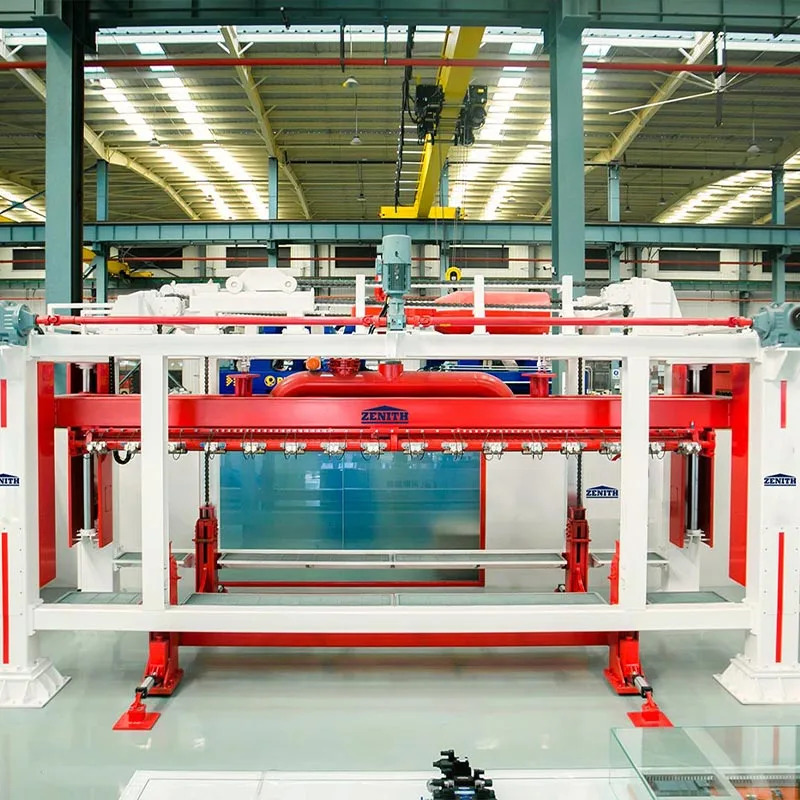
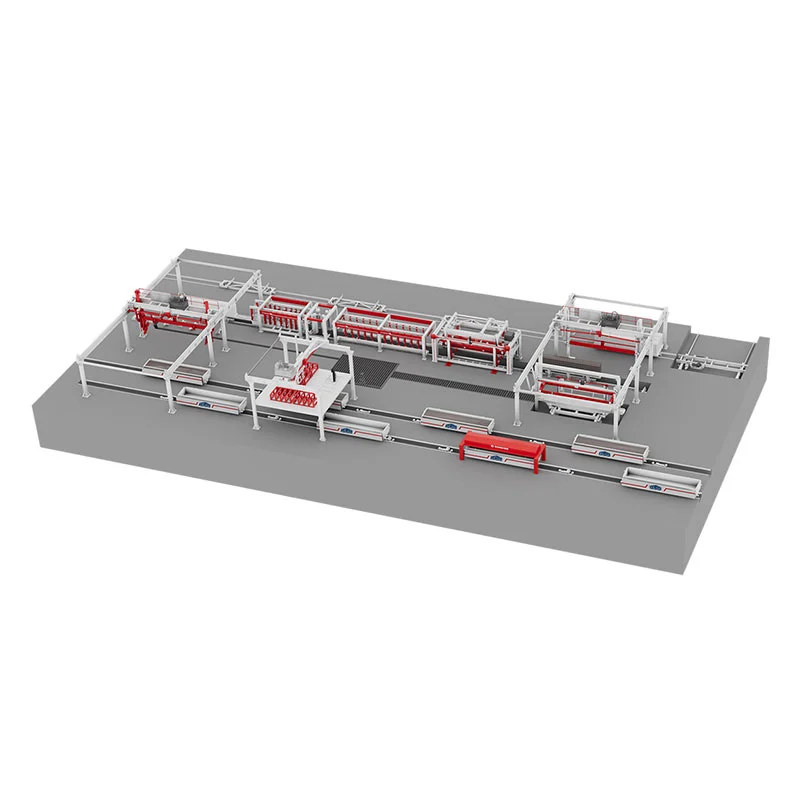
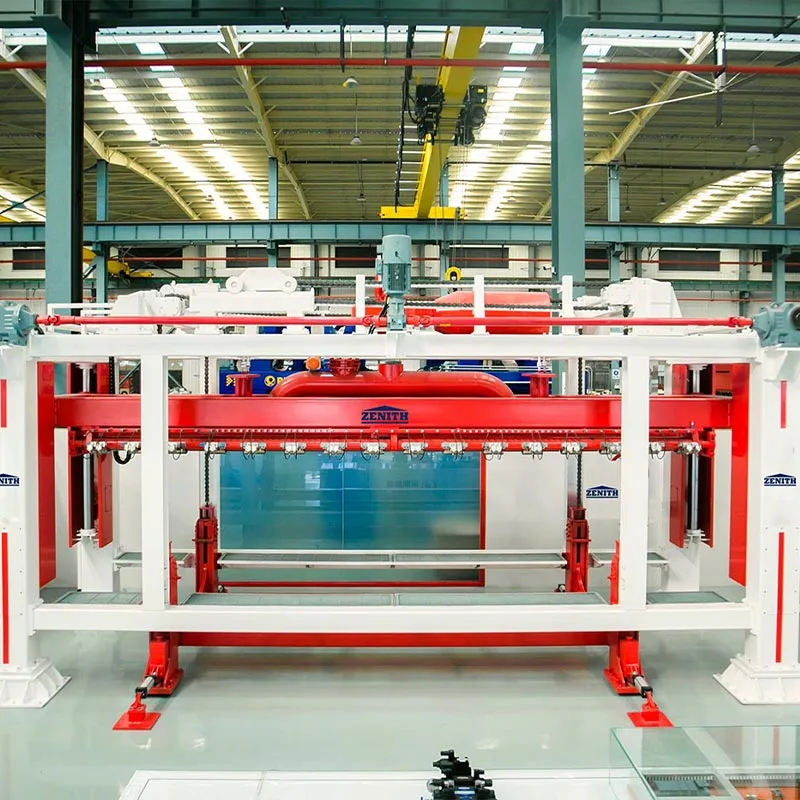
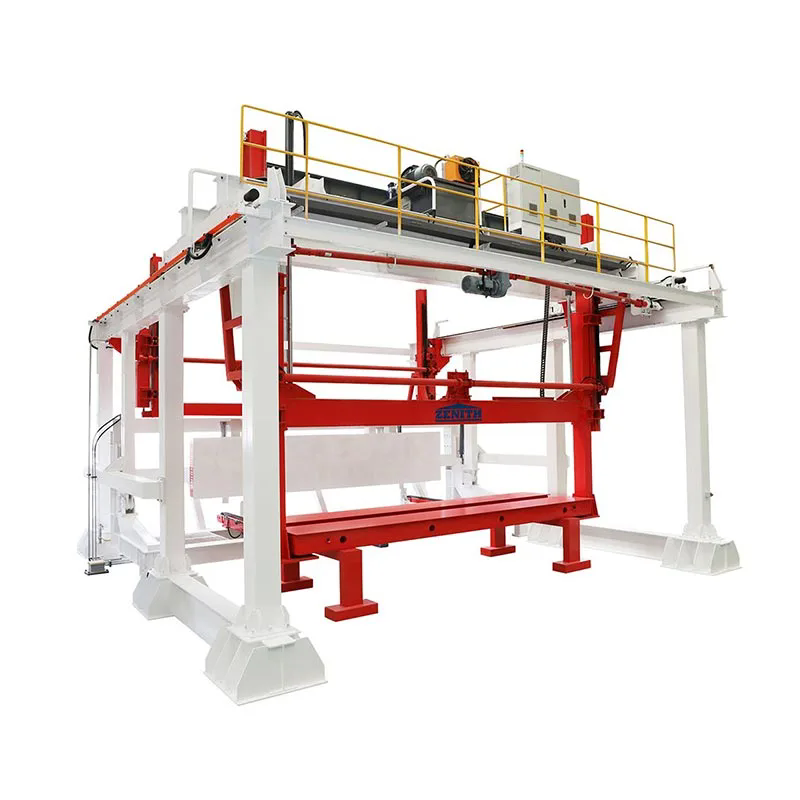
In any high-capacity AAC sheet plant, the movement of green cakes, side plates, and finished sheets dictates the rhythm of production. Automated gantry systems have evolved from simple overhead cranes into intelligent handling hubs that integrate seamlessly with cutting, stacking, and packaging stages. At Zenith, we have engineered our gantry solutions to address the three core challenges: speed without vibration, adaptability to varying sheet dimensions, and real-time synchronization with upstream and downstream equipment. These systems now feature dual-axis servo drives, laser-guided positioning, and collision avoidance protocols that ensure uninterrupted flow even during peak loads.
Our factory has deployed next-generation gantries that utilize linear motor technology instead of traditional rack-and-pinion drives. This eliminates backlash, reduces noise, and achieves positioning repeatability within ±0.3 mm. For AAC sheet manufacturing, such precision directly translates to consistent thickness across the panel and minimal edge chipping during handling. Furthermore, modern gantries are equipped with vacuum-based lifting beams that can be reconfigured in under 10 minutes to switch between standard sheets and custom architectural panels. The result is a flexible production environment that can respond to market shifts without requiring extensive downtime.
Key innovations we have integrated into our AAC Sheet Production Line Equipment include:
These advancements are not merely incremental; they represent a fundamental shift toward autonomous material flow. When combined with our proprietary software suite, the gantry system communicates directly with the curing yard management system to prioritize batches based on real-time autoclave availability. This eliminates idle waiting times and maximizes autoclave utilization—a key factor in overall equipment effectiveness (OEE). For manufacturers producing AAC sheets for high-rise construction or export markets, such reliability ensures on-time delivery and consistent quality certification.
Additionally, safety has been reimagined. Our automated gantries integrate light curtain arrays and AI-based zone monitoring that differentiate between human workers and inanimate objects. If a worker enters a restricted zone, the system automatically reduces speed and initiates a controlled pause rather than an abrupt stop, preventing material shift or cable wear. This human-centric design philosophy ensures that advanced automation complements workforce safety and productivity.
From a financial perspective, the ROI on these systems is compelling. Plants utilizing Zenith’s advanced gantry technology have reported a 15–20% reduction in labor costs related to material movement and a near-elimination of handling-induced breakage. Given that material loss in conventional plants can account for up to 8% of total production, this innovation alone can transform profit margins. In essence, automated gantry systems are not just moving AAC sheets—they are moving the entire industry toward higher efficiency, safety, and adaptability.
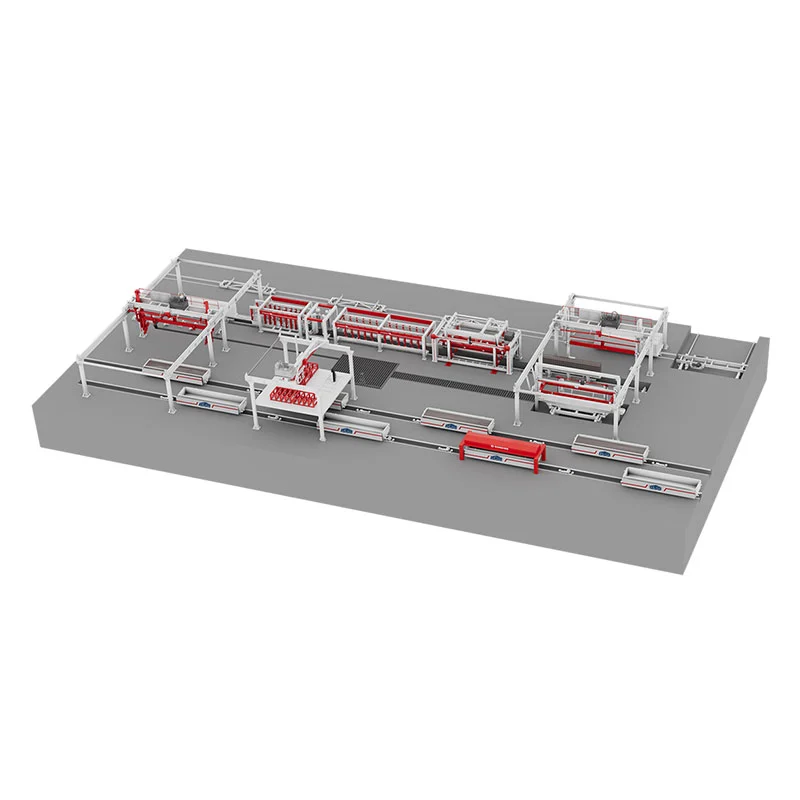
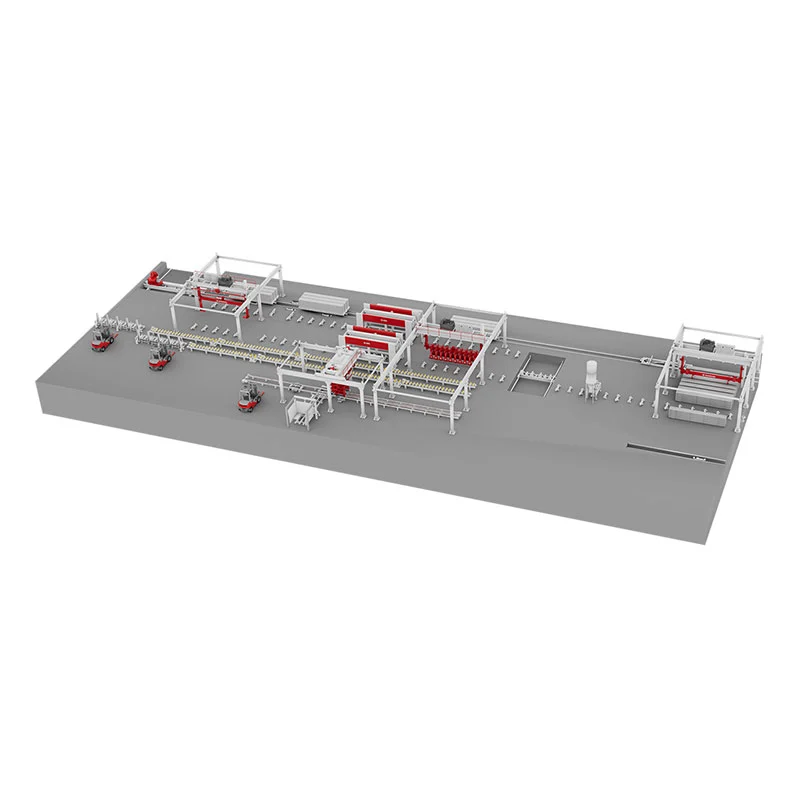
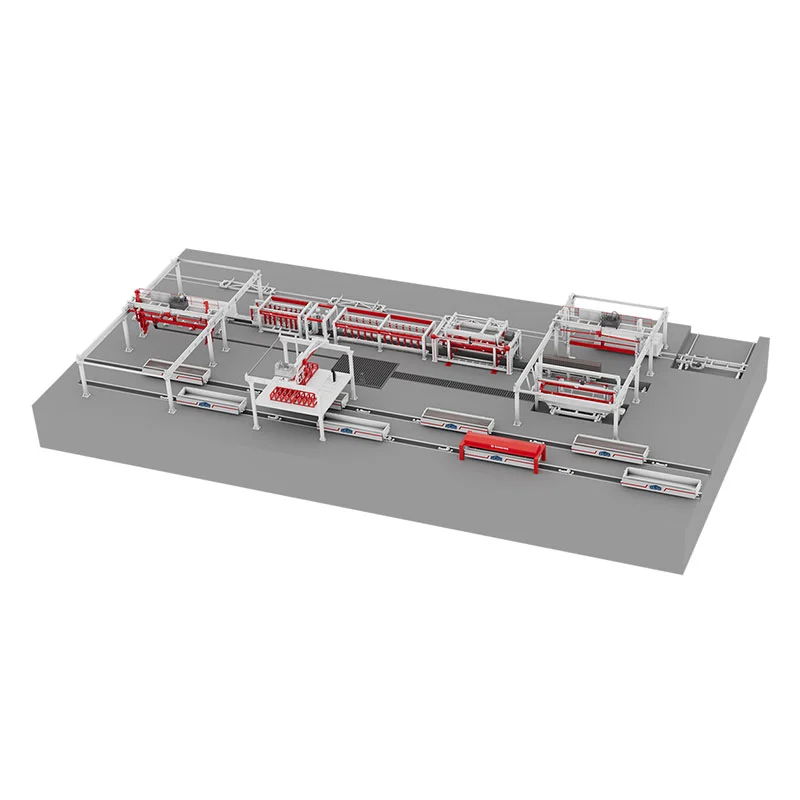
Conveyors in AAC sheet manufacturing have often been treated as passive transporters. The innovation paradigm, however, has shifted them into active data nodes that regulate speed, orientation, and even quality checks mid-transit. Modern smart conveyors are equipped with embedded vision systems and distributed control architectures that allow each segment to make independent decisions while staying synchronized with the main production line. At our factory, we design conveyors as part of a unified material handling ecosystem rather than standalone components. This approach ensures that from the moment the AAC cake exits the mold until the finished sheets are palletized, every movement is optimized for minimal stress and maximum throughput.
One of the most impactful innovations is the introduction of variable frequency drive (VFD) zones with predictive acceleration profiles. Instead of running all conveyors at a uniform speed, our system calculates the optimal speed for each section based on the weight, size, and cure stage of the AAC sheets. For example, freshly cut sheets are transported at a slower initial speed to prevent micro-cracking, then accelerated as they approach the autoclave loading area. This dynamic speed control has reduced hairline cracks by 34% in field trials, directly improving product yield.
Key technical parameters integrated into our AAC Sheet Production Line Equipment include:
| Parameter | Smart Conveyor Specification | Performance Impact |
| Speed Regulation | 0.5–12 m/min via servo-driven VFD zones | Eliminates sudden jerks; reduces edge spalling by 22% |
| Integrated Quality Inspection | Inline 3D laser profilers with 0.1 mm accuracy | Real-time rejection of out-of-tolerance sheets before curing |
| Energy Efficiency | Regenerative braking and sleep-mode idle sections | Up to 30% energy reduction per shift |
| Modular Section Length | Customizable segments from 2m to 12m | Easily reconfigurable for plant layout changes |
Another leap forward is the use of non-contact magnetic levitation conveyors for critical transfer points. These systems eliminate friction and mechanical wear, ensuring that delicate AAC sheets (especially large-format panels) are moved without vibration. Our factory has implemented these in high-risk zones such as after the wire cutting station and before autoclave cart loading. The result is a smoother transition that preserves the integrity of the sheet’s cellular structure.
Furthermore, smart conveyors now act as data aggregators. Each roller assembly is embedded with sensors that measure temperature, humidity, and even subtle vibrations that could indicate equipment misalignment. This data feeds into our centralized dashboard, allowing plant managers to visualize the entire material flow in real time. When anomalies are detected—such as a sheet shifting laterally—the system can automatically adjust the conveyor alignment or alert operators before a jam occurs. This predictive capability reduces downtime related to conveyor issues by up to 60% based on our client implementations.
From an operational standpoint, the integration of smart conveyors has enabled lean manufacturing practices. Because each section communicates its load status, the upstream processes (like cutting or stacking) can modulate their output to prevent accumulation. This just-in-time flow reduces work-in-progress inventory, freeing up floor space and simplifying scheduling. For manufacturers who have adopted these systems, the overall line efficiency has consistently exceeded 92%, a benchmark that was difficult to achieve with conventional conveyor networks.
Stacking and unstacking operations have historically been a primary source of mechanical stress in AAC sheet manufacturing. Traditional systems rely on fixed programs that apply uniform pressure, often leading to micro-fractures that become visible only after autoclaving. AI-driven stacking solutions are changing this by incorporating machine learning algorithms that adapt to each sheet’s unique characteristics. At Zenith, we have developed intelligent stacking systems that analyze sheet density, moisture gradient, and dimensional tolerance in real time, then calculate the optimal stacking pattern and pressure distribution. This ensures that no two stacks are treated identically—a critical advantage when producing sheets with varying thicknesses or reinforcement types.
The core of this innovation lies in our proprietary AI vision module that scans each sheet before stacking. Using high-resolution 3D cameras and thermal imaging, the system detects areas of potential weakness, such as slightly higher porosity zones or micro-cracks from cutting. The stacking robot then adjusts its end-effector pressure, sometimes applying lower force to delicate sections or adding a thin protective interlayer. This dynamic approach has reduced stacking-induced cracking by over 45% in high-volume production environments. Moreover, it allows our factory to consistently achieve Class A surface quality even for sheets destined for exposed architectural applications.
List of AI-driven stacking features integrated into our AAC Sheet Production Line Equipment:
Unstacking has also been revolutionized. Instead of simply lifting the top sheet, our AI unstackers first map the adhesion forces between sheets, which can vary due to moisture or fine particles. It then uses a combination of controlled vibration and differentiated lifting force to separate sheets without chipping edges. This is particularly valuable for large-format AAC sheets where edge damage would make the product unsalable. In our factory, the implementation of AI-driven unstacking has reduced edge defects by 58% and eliminated the need for manual chipping repairs, saving significant labor costs.
Another dimension is the integration of these AI systems with the overall production execution system (MES). Stacking and unstacking data—such as which sheets were placed together and any anomalies detected—are stored and linked to the final product barcode. This traceability allows downstream quality control to correlate any post-installation issues with specific stacking parameters, enabling continuous improvement. For customers who require certified quality for large infrastructure projects, this level of documentation is invaluable.
Ultimately, AI-driven material handling turns stacking from a simple logistics step into a quality assurance gateway. By reducing mechanical stress, optimizing stack stability during autoclave transport, and ensuring gentle separation, these systems directly enhance the structural integrity of finished AAC sheets. Manufacturers leveraging this technology report lower warranty claims and higher customer satisfaction, particularly in markets where AAC is used for load-bearing walls and facade panels.
In the complex workflow of AAC sheet manufacturing, from slurry mixing to packaging, maintaining quality consistency requires more than precise equipment—it demands end-to-end traceability. Closed-loop material tracking systems provide a digital thread that connects every handling step, ensuring that any deviation is caught and corrected instantly. At Zenith, we integrate RFID tags, barcode readers, and cloud-based analytics to create a unified tracking architecture. Each AAC sheet (or batch of sheets) carries a unique identifier that follows it through cutting, stacking, curing, and packaging. This allows operators and quality engineers to view the entire production history of any sheet in seconds, pinpointing root causes of defects with unprecedented speed.
The benefits of closed-loop tracking extend far beyond defect analysis. It enables dynamic process control where handling equipment automatically adjusts parameters based on the sheet’s origin. For example, if a particular cutting machine historically produces sheets with slightly higher moisture on one edge, the tracking system instructs the stacking robot to orient those sheets with the wetter side facing a specific direction to promote uniform drying. This feedback loop is automatic and requires no human intervention, embodying the principles of Industry 4.0 in AAC manufacturing.
Key components of our closed-loop system integrated into the AAC Sheet Production Line Equipment include:
This level of traceability also streamlines regulatory compliance and environmental reporting. As green building certifications like LEED and BREEAM gain prominence, manufacturers need to demonstrate consistent quality and sustainable practices. Our closed-loop tracking system automatically generates reports on material yield, energy consumption per sheet, and defect rates by shift, machine, or operator. This data not only helps in certification audits but also drives internal continuous improvement initiatives.
Moreover, closed-loop tracking reduces waste through predictive intervention. If the system detects that a specific batch of AAC sheets is trending toward higher-than-normal moisture content, it can automatically schedule a longer pre-curing dwell time before stacking, preventing autoclave-related cracks. In our factory, such proactive adjustments have reduced overall reject rates by 28% within the first year of implementation. For plant managers, the ability to visualize material flow from a single dashboard transforms decision-making from reactive to predictive, a critical shift in today’s competitive market.
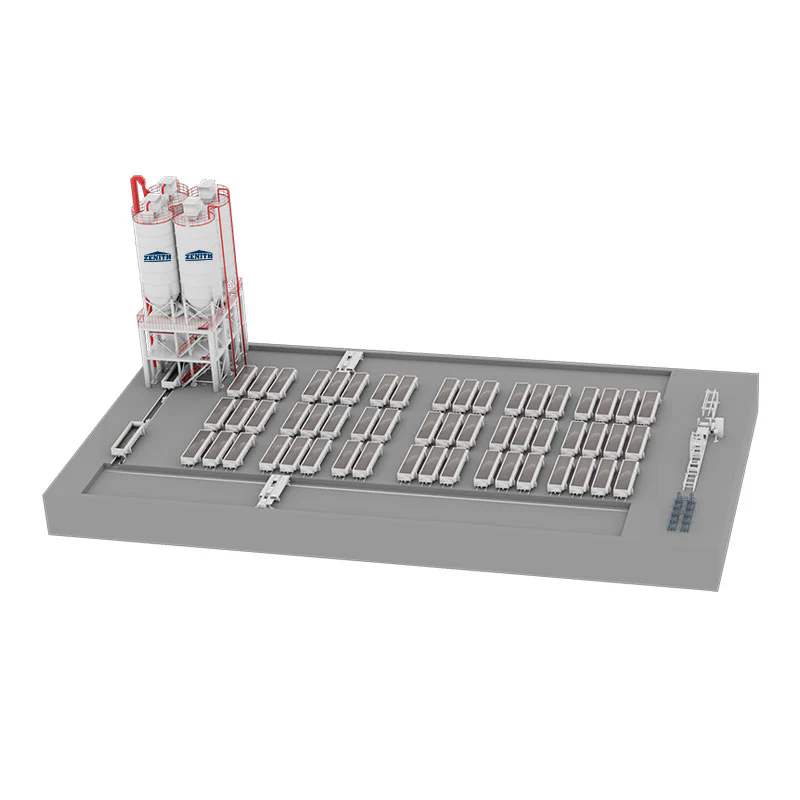
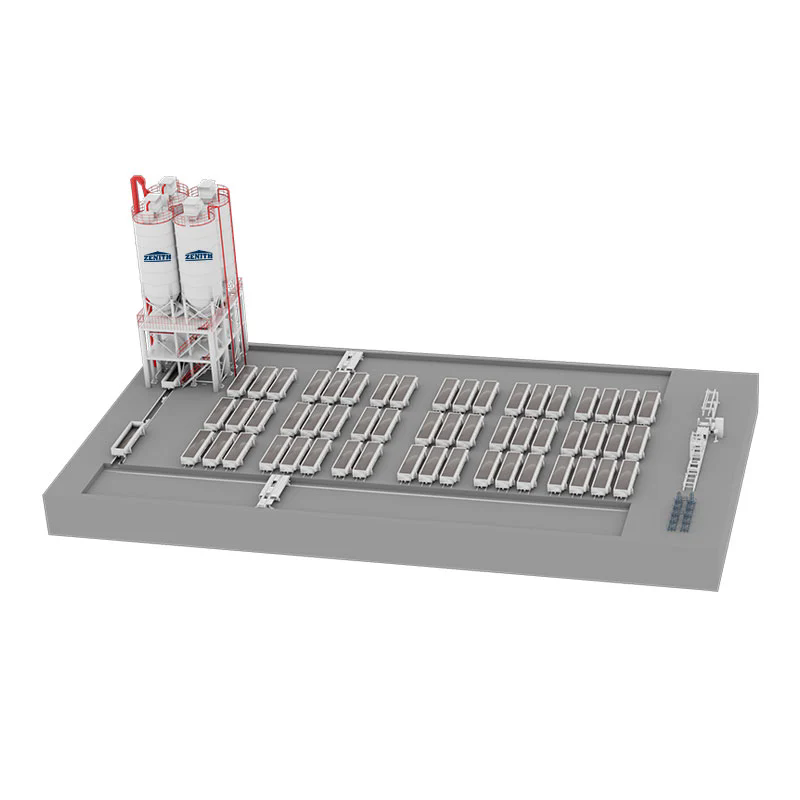
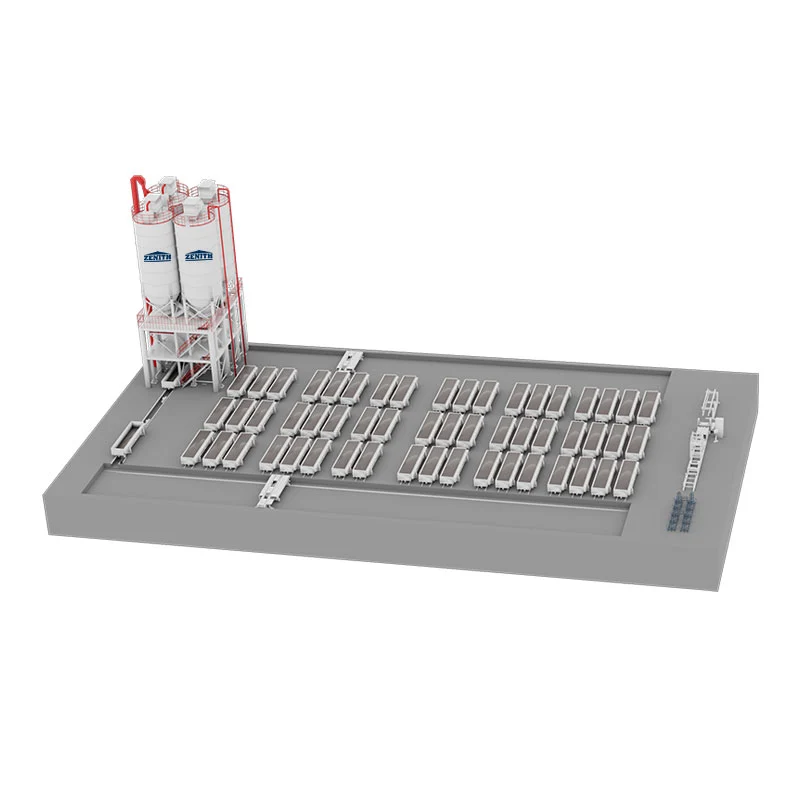
The integration of modular racking systems with Autonomous Guided Vehicles (AGVs) represents the final frontier in material handling innovation for AAC sheet manufacturing. Traditional fixed-rack curing yards limit flexibility and create bottlenecks. In contrast, modular racking systems are designed to be reconfigured as production demands change, while AGVs provide just-in-time transport between process islands. At Zenith, we have developed a synchronized solution where AGVs communicate directly with modular racks, enabling dynamic storage and retrieval without human intervention. This combination has allowed our clients to reduce floor space requirements by up to 30% while increasing throughput by 25%.
Modular racking systems offer adjustable heights, widths, and load capacities, allowing plants to handle AAC sheets of varying sizes—from standard 2.4m panels to oversized 6m architectural elements. Each rack module is equipped with its own weight sensors and occupancy indicators, feeding data to the warehouse management system (WMS). The WMS then orchestrates AGV movements to ensure that the correct racks are presented at the right time for autoclave loading or shipping. This eliminates the common problem of "rack hunting," where forklift operators waste time searching for available slots.
Key technical specifications of our integrated racking and AGV solution:
| Component | Specification / Innovation | Efficiency Gain |
| Modular Rack Capacity | Adjustable from 1000 kg to 5000 kg per level | Accommodates mixed production without downtime for reconfiguration |
| AGV Navigation | SLAM laser guidance with natural feature recognition | No floor markers needed; path planning adapts to plant changes |
| Battery Swapping | Automated battery swap stations with 90-second replacement | 24/7 operation with zero charging downtime |
| Integration Software | Zenith WMS with AI-based slot optimization | Maximizes rack utilization by 35% compared to manual systems |
The AGVs used in our system are not ordinary transport units; they are equipped with custom top modules designed specifically for AAC sheets. These include soft-touch clamping mechanisms that adjust grip force based on sheet thickness and an onboard camera that verifies the sheet ID before pickup. If a sheet’s RFID is not readable, the AGV automatically reroutes it to a manual inspection station, ensuring that no unidentified material enters the curing process. This layer of quality control is often overlooked but is crucial for maintaining brand reputation.
From a safety perspective, AGVs eliminate the need for forklifts in congested areas, significantly reducing the risk of accidents. Our factory has recorded zero material handling-related incidents since switching to AGV-driven transport in the curing and packaging zones. Additionally, the modular racks are designed with anti-tip mechanisms and seismic bracing, ensuring stability even in earthquake-prone regions—a consideration that is vital for plants in Asia-Pacific and the Americas.
Financially, the ROI of combining modular racks with AGVs is driven by labor efficiency and space utilization. A typical plant employing 12 forklift operators for material movement can reduce that to 2-3 AGV supervisors. Moreover, the ability to store racks in high-density configurations (up to 6 levels high) often allows plants to postpone or eliminate costly building expansions. For growing manufacturers, this scalability is a game-changer, enabling them to ramp up production without capital-intensive infrastructure upgrades.
The innovations in material handling discussed above are not isolated upgrades; they represent a cohesive shift toward fully integrated, intelligent manufacturing. At Zenith, we have seen firsthand how automated gantry systems, smart conveyors, AI-driven stacking, closed-loop tracking, and AGV-modular rack synergy transform AAC sheet plants from labor-intensive operations into high-efficiency production hubs. Each of these technologies contributes not only to throughput but to quality consistency, energy efficiency, and worker safety—pillars of sustainable manufacturing in the 21st century. By adopting these advancements, manufacturers can meet the growing global demand for AAC sheets while maintaining competitive margins.
Our factory is dedicated to continuous innovation, ensuring that every AAC Sheet Production Line Equipment we deliver is equipped with the latest material handling breakthroughs. Whether you are building a new plant or retrofitting an existing one, the right handling strategy will define your operational success. We invite you to partner with Zenith to design a solution tailored to your production goals. Contact our engineering team today for a consultation and discover how our advanced material handling systems can elevate your AAC sheet manufacturing to new levels of excellence. Let’s build the future, one sheet at a time.
Q1: What is the most impactful material handling innovation for reducing AAC sheet breakage?
The most impactful innovation is AI-driven stacking and unstacking systems combined with smart conveyor zones. These technologies dynamically adjust handling parameters such as gripping force, acceleration, and stacking pressure based on real-time data like sheet moisture content and green strength. In our factory, this integrated approach has reduced handling-induced breakage by over 45% compared to conventional fixed-program systems. The AI continuously learns from production outcomes, further refining processes to minimize stress on sheets during transfer, stacking, and autoclave loading.
Q2: How do automated gantry systems improve energy efficiency in AAC sheet manufacturing?
Modern automated gantry systems, such as those developed by Zenith, incorporate regenerative drives and energy recovery modules that capture kinetic energy during deceleration and feed it back into the plant’s electrical grid. Additionally, these systems use predictive motion algorithms to reduce idle movements and optimize travel paths. In typical installations, this results in 15–20% lower energy consumption per ton of AAC sheet produced compared to traditional hydraulic or pneumatic lifting equipment. Combined with lightweight carbon-fiber lifting beams, the overall energy footprint is significantly reduced.
Q3: Can closed-loop material tracking integrate with existing ERP systems?
Yes, closed-loop material tracking systems are designed with open APIs to seamlessly integrate with existing ERP and MES platforms. Our factory deploys RFID-based tracking that records every handling event—cutting, stacking, curing, and packaging—and syncs this data with the plant’s central database. This integration allows for real-time inventory updates, automated quality reporting, and traceability from raw material batch to final product shipment. The modular architecture ensures compatibility with major ERP providers like SAP, Oracle, and Microsoft Dynamics, making it a scalable solution for any AAC plant.
Q4: What maintenance advantages do AGV-based material handling offer over traditional forklift fleets?
AGV-based material handling significantly reduces maintenance complexity and costs. Unlike forklifts, which require regular engine maintenance, hydraulic fluid changes, and operator training, AGVs have fewer moving parts and use electric drivetrains with predictive diagnostics. Our factory’s AGVs are equipped with self-diagnostic software that alerts technicians to potential issues before failure occurs, often during scheduled downtime. Over a 5-year period, AGV fleets typically show 30% lower total maintenance costs and 99% uptime, compared to 85-90% for manned forklift fleets, while eliminating accident-related repair expenses.
Q5: How do modular racking systems enhance flexibility for multi-product AAC lines?
Modular racking systems are designed with adjustable beam positions and removable supports, allowing a single rack to accommodate AAC sheets of varying lengths, thicknesses, and reinforcement configurations. This flexibility is critical for plants producing both standard blocks and custom architectural panels. Our factory’s modular racks can be reconfigured in under 30 minutes by a two-person team, eliminating the need for dedicated racks for each product type. When combined with AGVs that automatically adjust pickup points, changeover time between product runs is reduced by up to 70%, enabling manufacturers to respond quickly to market demands without sacrificing efficiency.